

In Arizona, hailstorms don’t always leave behind obvious roof damage—but that doesn’t mean your roof is in the clear. At ProWest Roofing, we’ve inspected thousands of Mesa-area homes after storms, and we know the signs most homeowners miss. This guide will help you spot hidden hail damage before it turns into bigger problems.
Seeing granules in your gutters? That’s a red flag. Schedule a free inspection here.
After a severe hailstorm, many homeowners make the mistake of assuming their roof is fine because they don’t see obvious damage from the ground. However, hail damage is often subtle and can go undetected for months—until leaks develop and cause extensive interior damage. This comprehensive guide will help you identify hail damage on your Arizona roof and understand when to call a professional.
Why Hail Damage is Often Hidden
Hail damage doesn’t always create immediately visible holes or missing shingles. Instead, it often manifests as:
- Bruising that weakens shingles without breaking through the surface
- Granule loss that’s only visible up close
- Micro-cracks that expand over time under Arizona’s intense sun
- Compromised sealant that allows wind and water infiltration
Arizona’s climate makes hidden hail damage particularly dangerous. The extreme heat accelerates deterioration, while monsoon rains exploit even minor vulnerabilities. What starts as seemingly minor damage can quickly become a major roofing failure.
Visual Inspection Checklist: What to Look For
From the Ground
Before climbing onto your roof (which we don’t recommend for safety reasons), conduct a thorough ground-level inspection:
1. Check Your Gutters and Downspouts
What to look for:
- Dents or dings in aluminum gutters
- Chipped paint on metal gutters
- Accumulation of shingle granules (they look like coarse sand)
- Dents in downspout elbows
Why it matters: Gutters are made of softer metal than roofing materials, so they often show impact damage first. If your gutters are dented, your roof likely sustained damage too. Granules in gutters indicate that hail has knocked protective coating off your shingles.
2. Inspect Roof-Mounted Equipment
What to look for:
- Dents on air conditioning units
- Damage to satellite dishes
- Dented or damaged roof vents
- Bent or damaged flashing around chimneys
Why it matters: These items are excellent indicators of hail size and impact force. If your AC unit has dents, your roofing materials absorbed similar impacts.
3. Examine Your Siding and Outdoor Features
What to look for:
- Dents or chips in vinyl or aluminum siding
- Damage to window screens or frames
- Chipped paint on outdoor furniture, fencing, or mailboxes
- Damaged landscaping or plants
Why it matters: Hail doesn’t discriminate—if it damaged these items, it likely damaged your roof as well.
4. Look for Obvious Roof Damage
What to look for:
- Missing or displaced shingles
- Cracked or broken tiles (for tile roofs)
- Visible holes or punctures
- Sagging or uneven roofline
Why it matters: While most hail damage is subtle, severe storms can cause obvious structural damage that requires immediate attention.
Close-Up Inspection (Professional Recommended)
A thorough roof inspection requires getting on the roof, which should only be done by trained professionals with proper safety equipment. Here’s what Prowest Roofing inspectors look for:
Asphalt Shingle Damage
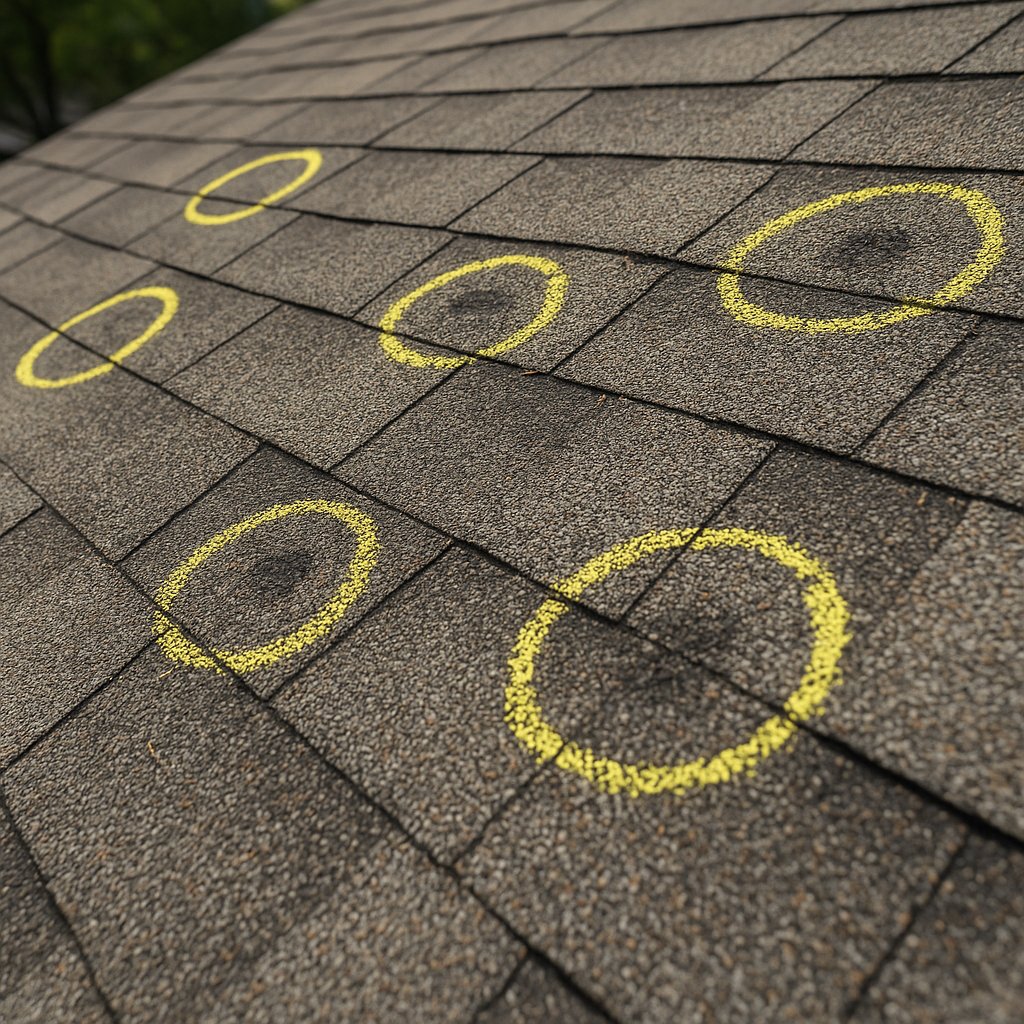
Hail hits (bruising):
- Dark spots where hail impact has compressed the shingle
- Soft spots that feel spongy when pressed
- Loss of granules exposing the black asphalt underneath
- Random pattern of damage (not in rows or uniform patterns)
Functional damage:
- Cracks that penetrate through the shingle
- Tears or punctures
- Exposed fiberglass mat
- Loosened or lifted shingle tabs
Granule loss:
- Shiny spots where granules are missing
- Inconsistent coloring across the roof
- Bare patches exposing the asphalt layer
Tile Roof Damage
What professionals look for:
- Cracked tiles (may only be visible from certain angles)
- Chipped edges or corners
- Broken or displaced tiles
- Damage to the underlayment beneath tiles
- Compromised mortar or fasteners
Flat/Low-Slope Roof Damage
What professionals inspect:
- Punctures or tears in membrane roofing
- Blistering or bubbling
- Loose or damaged seams
- Compromised flashing
- Damage to roof-mounted equipment
The Difference Between Hail Damage and Normal Wear
One of the most challenging aspects of hail damage assessment is distinguishing storm damage from normal aging. Here’s how to tell the difference:
Hail Damage Characteristics
- Random pattern: Damage appears scattered across the roof without uniformity
- Sudden appearance: Damage occurs immediately after a known storm event
- Consistent impact marks: Multiple areas show similar types of damage
- Corresponding damage: Other property features (gutters, AC units, siding) also show impact damage
- Fresh appearance: Damage looks recent, with no weathering or discoloration
Normal Wear Characteristics
- Uniform pattern: Wear appears evenly distributed or concentrated in specific areas (south-facing slopes, valleys)
- Gradual development: Deterioration occurs slowly over months or years
- Age-related issues: Curling, cupping, or brittleness consistent with shingle age
- Isolated to roof: No corresponding damage to other property features
- Weathered appearance: Damage shows signs of aging, sun exposure, or oxidation
Common Mistakes Homeowners Make
Mistake #1: Waiting Too Long to Inspect
Many homeowners wait weeks or months after a storm to check for damage. By then, minor issues may have worsened, and insurance companies may question whether damage occurred during the reported storm.
Solution: Schedule a professional inspection within days of a significant hailstorm.
Mistake #2: Relying Only on Ground-Level Inspection
Most hail damage isn’t visible from the ground. Homeowners who skip professional inspections often miss critical damage until leaks develop.
Solution: Always get a professional roof inspection after severe weather.
Mistake #3: Assuming New Roofs Are Immune
Even relatively new roofs can sustain hail damage. The severity depends on hail size, wind speed, and impact angle—not just roof age.
Solution: Inspect all roofs after hailstorms, regardless of age.
Mistake #4: Ignoring Minor Damage
Small cracks or minor granule loss may seem insignificant, but Arizona’s climate accelerates deterioration. What’s minor today can become major in months.
Solution: Address all damage promptly, even if it seems minor.
When to Call a Professional
You should schedule a professional roof inspection if:
- Your area experienced hail larger than 1 inch in diameter
- You notice any of the warning signs listed above
- Your neighbors are getting roof repairs or replacements
- Your insurance company recommends an inspection
- You’re unsure whether damage occurred
What to Expect from a Professional Inspection
When you schedule a free inspection with Prowest Roofing, here’s what happens:
Step 1: Initial Consultation
We’ll discuss the storm event, your concerns, and any visible damage you’ve noticed.
Step 2: Comprehensive Roof Examination
Our certified inspectors will:
- Safely access your roof using proper equipment
- Examine all roof surfaces, including hard-to-reach areas
- Check gutters, flashing, vents, and roof-mounted equipment
- Document all damage with high-resolution photos
- Assess the condition of your roof’s underlayment and structure
Step 3: Detailed Report
You’ll receive:
- A written report of our findings
- Photographic documentation of all damage
- Honest recommendations for repair or replacement
- An estimate for necessary work
- Guidance on next steps for insurance claims
Step 4: Insurance Assistance
If damage is found, we’ll:
- Help you understand your coverage
- Provide documentation in the format your insurer requires
- Communicate with adjusters on your behalf
- Ensure you receive fair compensation
The Cost of Ignoring Hail Damage
Delaying repairs after hail damage can lead to:
- Water infiltration: Damaged shingles allow water to penetrate, causing rot, mold, and structural damage
- Increased energy costs: Compromised roofing reduces insulation effectiveness
- Voided warranties: Many manufacturers void warranties if damage isn’t addressed promptly
- Insurance complications: Waiting too long may jeopardize your claim
- Higher repair costs: Minor damage becomes major when left untreated
- Decreased property value: Visible roof damage reduces home value
Take Action Today
Don’t wait for leaks to develop. If your Phoenix-area property experienced recent hailstorms, protect your investment with a professional inspection.
Prowest Roofing offers FREE, no-obligation hail damage inspections.
✓ Over 20 years of experience
✓ GAF Master Elite certification
✓ Insurance claim specialists
✓ Same-day emergency service available
✓ Serving all of Arizona
Call (602) 738-7663 for your free inspection
Visit prowest.com
Based in Gilbert, serving Mesa, Phoenix, Tucson, Tempe, Scottsdale, Chandler, Apache Junction, and beyond
Don’t let hidden damage become a costly disaster. Contact Prowest Roofing today.